

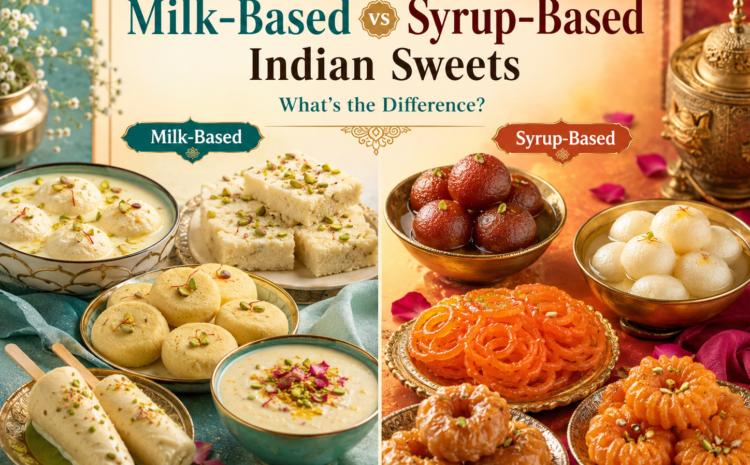
Indian sweets, also known as mithai, they are an essential part of ever celebrations and festivals. From weddings to Diwali gatherings and even family feasts, sweets like Gulab jamun, Rasmalai, Jalebi, Barfi and Laddoo always have a place on the table.
There are so many Indian sweets in Singapore, it’s too tempting for explorers to resist. Some candies are rich and creamy, some crisp and syrupy, and a few blend the two textures in unexpected ways. To understand this vast world of sweets better, it can be divided in to two broad categories namely milk based Indian sweets and syrup based Indian sweets.
Understanding Indian Sweets: A Blend of Tradition and Technique
Indian desserts are not just about sugar. They are built on traditional cooking methods that converts simple ingredients like milk, flour, ghee, sugar, and nuts into complex flavours and textures.
Milk-based sweets depend heavily on dairy reduction, curdling, or thickening. Syrup-based sweets, on the other hand, rely on sugar syrup also called chashni to create their signature taste and texture.
While the groups are helpful, many sweets overlap both styles. For example, Gulab jamun uses milk but is soaked in syrup, making it a fusion dessert loved across India and Singapore.
What are Milk based Indian Sweets?
Milk based Indian desserts are those where the main structure is milk or milk products. These include ingredients like reduced milk solids, fresh paneer, condensed milk and cream, etc.
These sweets are often soft, rich and not too sweet compared to syrup-based options. Some are creamy or slightly grainy and melt in your mouth.
Rasmalai – soft, fragrant and creamy
Rasmalai is one of the most popular milk-based sweets in Singapore. It is made of soft discs of cottage cheese soaked in sweetened milk seasoned with saffron.
It is light, but rich in texture, and a favourite after heavy meals. Especially uplifting in Singapore’s warm climate, rasmalai is often served chilled and garnished with pistachios and almonds.
Kalakand: The Granulated Milk Sweet
Kalakand is a moist grainy sweet made by boiling down milk. It has a strong dairy taste and is generally sprinkled with cardamom and nuts.
Unlike syrup based sweets, Kalakand does not have to be soaked. It’s a more subtle flavor because it adds its sweetness to the milk solids naturally.
Peda: Small but Rich
Peda is a compact milk-based sweet made from khoya and sugar. It is often flavoured with cardamom, saffron, or pistachio.
In Singapore, Peda is normally found in Indian sweet shops during festivals like Diwali. It has a long shelf life and easy serving size make it a popular gifting option.
Firni: Silky Rice Pudding with a Royal Touch
Firni is a traditional North Indian milk-based dessert. It is often confused with kheer but it has its own identity. Firni is made with ground rice cooked slowly in milk which results in a smoother and silky texture unlike kheer which uses whole rice grains.
It is usually flavored with cardamom, saffron and rose water and served cold in small clay bowls to enhance its aroma and presentation. Light and luxurious at the same time, firni is topped with pistachios and almonds.
Kulfi Indian Frozen Milk Dessert
Kulfi is a frozen dairy dessert that is often compared to ice cream but is denser and creamier. It is produced by slow reduction of milk and freezing in moulds.
The popular flavours are mango, pistachio and saffron. In Singapore, kulfi is especially popular as a refreshing dessert to follow a spicy Indian meal.
What are Indian sweets with syrup?
Sugar syrup is key to the texture and flavour of syrup-based Indian sweets. These sweets are usually fried or shaped first, and then dipped in or coated in a warm syrup.
The syrup is usually perfumed with cardamom, rose water or saffron, giving the sweets an aromatic sweetness. These desserts are often eaten warm and tend to be more intense in flavour.
Gulab Jamun: The King of Syrup Sweets
Gulab jamun is one of the most popular Indian sweets in Singapore. Prepared from milk solids, the dough is given a shape of balls than fried, and soaked in sugar syrup.
The result is soft, juicy, and intensely sweet. It is a compulsion at weddings, festivals, and restaurant buffets.
Jalebi: Crispy and Syrupy
Jalebi is a bright orange spiral shaped sweet made by frying batter and drenched it in sugar syrup.
It is crispy on the outside and juicy on the inside. In Singapore, jalebi is regularly enjoyed fresh and warm, sometimes paired with rabri for extra richness.
Balushahi: Flaky and Sweet
Balushahi is a chipped, doughnut-like sweet that is fried and dipped in sugar syrup. Different than Gulab jamun, it does not absorb syrup totally, which keeps its layered texture intact.
It is available in Indian sweet shops in Singapore, especially during festive seasons.
Rasgulla: Soft and Spongy
Rasgulla is made from soft cottage cheese balls cooked in light sugar syrup. It is soft, spongy, and mildly sweet.
This dessert is especially popular in Singapore’s Bengali and North Indian communities and is often served chilled.
Milk-Based vs Syrup-Based Indian Sweets: Key Differences
The main difference between the two categories is in the texture, the way it is prepared, and how the sweetness is delivered.
Milk-based sweet like rasmalai, peda, kalakand, firni, and kulfi are creamy and dense, and they are often less sweet in taste. They add their sweetness to the milk base.
These syrup based sweets, such as gulab jamun, jalebi, imarti, balushahi, and rasgulla, are more dramatic in texture. They are dripping or coated with syrup, making them sweeter and more indulgent.
But many sweets like gulab jamun and rasgulla straddle both categories, demonstrating the flexibility of Indian dessert.
Indian Sweets in Singapore
Indian sweets are readily available in sweet shops, restaurants and festive pop-ups, a testament to Singapore’s vibrant Indian food culture. Some of the most popular choices are:
- Gulab Jamun is a top favourite for celebrations and buffets
- People love rasmalai for its chilled and creamy texture
- Jalebi is popular street-style dessert, often served fresh
- Ladoo (Laddu) is made of gram flour, coconut or boondi and is commonly used in festivals
- Barfi is a dense milk-based sweet available in flavours like coconut, pistachio, and chocolate
- A premium cashew-based sweet often gifted during Diwali is Kaju Katli
- Kulfi is a frozen dessert perfect for Singapore’s tropical weather
- Rasgulla is soft, syrupy and refreshing
These sweets are not just desserts but are part of cultural celebrations and family traditions across Singapore’s Indian community.
Why Indian Sweets Are So Loved in Singapore
The multi-cultural food scene in Singapore has made Indian sweets a popular choice. Indian desserts are perfectly acceptable on festive occasions, restaurant dining and even for casual snacking.
Variety also makes them attractive. Whether you are in the mood for something light like rasgulla or something rich like barfi, there is always a sweet that matches your mood.
Final Thoughts
The difference between milk-based and syrup-based Indian sweets is not just ingredients but it is about experience.
Milk-based sweets like rasmalai, kalakand, peda, firni and kulfi are creamy and mildly sweet. Syrup-based sweets like gulab jamun, jalebi, imarti, balushahi and rasgulla are big on flavor and have sticky, indulgent textures.
In Singapore, they are equally loved and classics such as gulab jamun, barfi, laddoo, kaju katli and jalebi have become everyday favourites, especially during festivals and celebrations.
Indian sweets are about joy and tradition and sharing. Whether it’s comfort in a milk-based form or sweet escape in a syrup-based form, there is always a mithai to sweeten your moment.