

Introduction
An Indian restaurant is not just a place where you sit down and order food. It is an experience built around aroma, warmth, colour, spice and sharing. The moment a plate of dum biryani arrives at the table, or a basket of fresh naan is placed beside a rich curry, the meal begins to feel special.
For food lovers, Indian cuisine offers something deeply satisfying. It can be bold, creamy, smoky, spicy, mild, rich or comforting. One person may come for biryani, another for kebabs, someone else for butter chicken, while a vegetarian diner may look forward to palak paneer, dal tadka or chana masala. That variety is what makes the Indian restaurant experience so enjoyable.
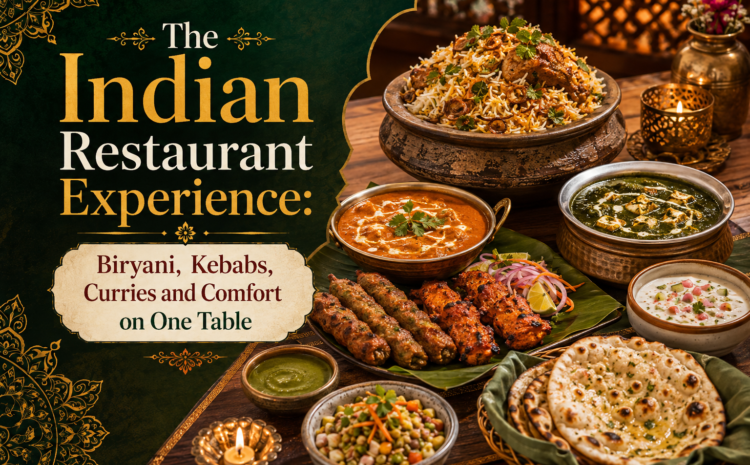
A good Indian meal is not about one dish alone. It is about how everything comes together on one table. Fragrant rice, grilled starters, slow-cooked curries, warm breads, cooling raita and fresh chutneys all play their part. Together, they create a meal that feels generous, social and full of character.
What Makes an Indian Restaurant Experience Special?
The beauty of an Indian restaurant lies in its layers. The food is rich in flavour, but the experience is also about the way dishes are shared. Unlike meals where everyone eats only from their own plate, Indian dining often encourages people to order a spread and enjoy everything together.
This makes the meal more interactive. You may start with kebabs, move on to biryani, dip naan into curry, add chutney to a bite, and cool down the spice with raita. Every dish adds something different.
Another special part is the balance of flavours. Indian food is often described as spicy, but it is much more than that. It can be sweet from caramelised onions, smoky from the grill, tangy from yogurt, earthy from lentils, creamy from butter and cream, and fresh from herbs like coriander and mint.
That is why an Indian restaurant appeals to many types of diners. Whether you love strong spices or prefer mild comfort food, there is always something on the menu for you.
Biryani: The Star of the Table
Usually, it’s the Biryani that gets everyone’s attention. It looks great, smells good and has a complete feel itself. A good dum biryani is a layering of basmati rice, tender meat or vegetables, fried onions, herbs and spices. The slow-cooking method allows the flavors to permeate every grain of rice.
The chicken dum biryani is a popular choice for many diners, being flavourful, familiar and satisfying. The chicken stays tender and the rice soaks up the flavor of the spices and herbs. The mutton biryani offers a richer, deeper taste and is ideal for those who want a stronger, more filling meal.
Don’t miss the vegetarian options like vegetable dum biryani and paneer biryani. They smell and feel the same, but have colorful veggies or soft paneer in place of meat.
What makes biryani the quintessential Indian restaurant meal is its communal nature. A large plate can be shared, served with raita, curry or kebabs, and enjoyed as the centrepiece of the table.
Kebabs: Smoky, Juicy, and Made to Share
Before the biryani or curries arrive, kebabs are one of the best ways to start the meal. They are smoky, juicy and full of spice, making them a favourite among food lovers.
Shami kebab is soft, smooth and lightly spiced. It is often made with minced meat, lentils and spices, giving it a melt-in-the-mouth texture. Chapli kebab is bolder and more rustic, with a flatter shape and stronger flavour. Seekh kebab brings a smoky grilled taste, while chicken tikka offers tender pieces of marinated chicken cooked until slightly charred.
Kebabs are perfect for sharing because they are easy to pick, dip and enjoy. They pair beautifully with mint chutney, sliced onions and a squeeze of lemon. The freshness of chutney balances the richness of the meat, while the lemon adds brightness.
In an Indian restaurant, kebabs set the mood for the meal. They give the table something exciting to begin with and prepare the appetite for the main dishes.
Curries: The Heart of Indian Comfort Food
If biryani is the star, curries are the heart of an Indian restaurant experience. They bring warmth, depth and comfort to the table. Each curry has its own personality, depending on the ingredients, spices and cooking style.
Butter chicken is one of the most loved Indian curries. It is creamy, mildly spiced and slightly sweet, making it a great choice for diners who prefer a smoother flavour. Chicken tikka masala has a richer and more spiced gravy, with marinated chicken pieces cooked in a bold sauce.
For those who enjoy deeper flavours, mutton korma is a strong choice. It is slow-cooked, aromatic and rich, often made with spices, yogurt and a thick gravy. Lamb curry and lamb shank curry also bring a hearty taste that works well for special meals.
Vegetarian curries are equally important. Palak paneer is a dish with creamy spinach gravy and cubes of soft paneer. Paneer butter masala is rich and creamy. Dal tadka is simple, comforting and made with lentils and finished off with a hot tempering of spices. Chana masala is a spicy and tangy flavour made from chickpeas that goes well with naan or rice.
Curries end the meal. They are great for sharing, dipping and mixing with rice or bread.
Haleem: Slow-Cooked Comfort in a Bowl
Haleem is one of those dishes that makes the table a little bit more special. It’s thick and hearty and deeply comforting. Haleem is a slow-cooked mixture of meat, lentils, wheat and spices, cooked until smooth and rich.
Haleem has a consistency different from Biryani or Curry. It’s soft, filling and full of slow cooked flavour. Fried onions, ginger, coriander, green chillies and lemon are some of the toppings that make it even more enjoyable.
Haleem is worth trying if you are a food lover, who enjoys traditional food. It has a certain warmth, an old-style cooking quality that makes it different from a lot of other restaurant dishes. It can be served as a starter, side or even a main dish for someone who wants something filling and satisfying.
Bread, rice and sides: The unseen heroes
A good meal at an Indian restaurant is never complete without the sides. Simple but they add balance to the table: naan, roti, basmati rice, raita, chutney, salad, and pickles.
Naan is soft and warm and perfect for scooping up rich curries like butter chicken or paneer butter masala. Roti is lighter and goes well with dal, chana masala or vegetable curry. Basmati rice is a great partner to rich gravies and a comforting foundation for the meal.
Raita is especially important when eating biryani or spicy curries. Its cool yogurt base helps balance heat and adds freshness. Mint chutney adds a bright herbal flavour to kebabs, while pickled onions and lemon bring sharpness.
These sides may not always get the spotlight, but they make every bite better.
Vegetarian Options That Are Just as Filling
A good Indian restaurant menu should always include good vegetarian options. Indian cuisine is celebrated for making vegetarian food rich, filling and flavourful.
You can serve vegetable dum biryani, paneer dum biryani, palak paneer, paneer butter masala, dal tadka, chana masala, aloo gobi and vegetable kadhai as main dishes. They aren’t just substitutes for non-meat eaters. They are favorites in their own right.
Paneer dishes are rich and full of protein, and the lentil and chickpea dishes are comforting and hearty. Vegetable curries bring colour, spice and texture. Indian food is therefore a great choice for mixed groups where some people eat meat and some prefer vegetarian dishes.
Everyone is happy and no one is left out.
Constructing the Perfect Indian Restaurant Dinner
The best way to enjoy an Indian restaurant is to order a balanced spread. Start with kebabs to bring smoky flavour to the table. Add biryani as the main rice dish. Choose one or two curries, The best way to enjoy an Indian restaurant is to get a balanced spread. Start with kebabs to get the smoky flavour on the table. Add biriyani as rice dish. Select one or two curries, meat and vegetarian. Serve with naan, roti, raita, and chutneys for the complete experience. combination could include chicken dum biryani, shami kebab, butter chicken, palak paneer, dal tadka, naan and raita. For a richer feast, add mutton biryani, chapli kebab, haleem or chana masala.
You can pair your chicken dum biryani with shami kebab, butter chicken, palak paneer, dal tadka, naan and raita for a good meal combination. Add mutton biryani, chapli kebab, haleem or chana masala for a richer feast. and comfort all in one sitting.
Why Food Lovers Keep Coming Back
Food lovers return to Indian restaurants because the experience feels complete. The food is generous, the flavours are layered, and the meal encourages sharing. It is suitable for family dinners, casual lunches, celebrations, office meals and weekend cravings.
Indian food also has emotional comfort. A warm bowl of curry, a fragrant plate of biryani or a smoky kebab can feel familiar even to someone trying it for the first time. That is the power of food made with depth and care.
In a place like Singapore, where diners enjoy variety and bold flavours, an Indian restaurant offers a meal that feels both exciting and comforting.
Conclusion
The Indian dining experience is more than just ordering food. It is about sitting around a table full of biryani, kebabs, curries, haleem, naan, chutneys and sides and enjoying each flavor together.
Every dish is different – from the smell of dum biryani to the smoky bite of kebabs and the warmth of rich curries. Some are bold, some are creamy, some are hearty, some are fresh. They make a meal that is generous and memorable together.
This is what makes the experience special for anyone who loves Indian food. One table, many flavours. Comfort in every bite.