

Introduction
Indian food has always been more than just spices. It is about patience, heat, aroma, texture and the way ingredients are cooked. A dish like dum biryani does not become memorable only because of basmati rice and masala. It becomes special because of slow cooking. A kebab does not get its smoky flavour from seasoning alone. It needs fire, heat and skill. A curry does not taste rich only because it has cream or tomatoes. It needs time for the spices to open up and blend.
In Singapore, Indian food has found a strong place among food lovers. From casual food courts to elegant fine dining restaurants, people enjoy dishes that feel bold, comforting and full of tradition. But behind many popular Indian dishes is something deeper: traditional cooking methods that have been passed down for generations.
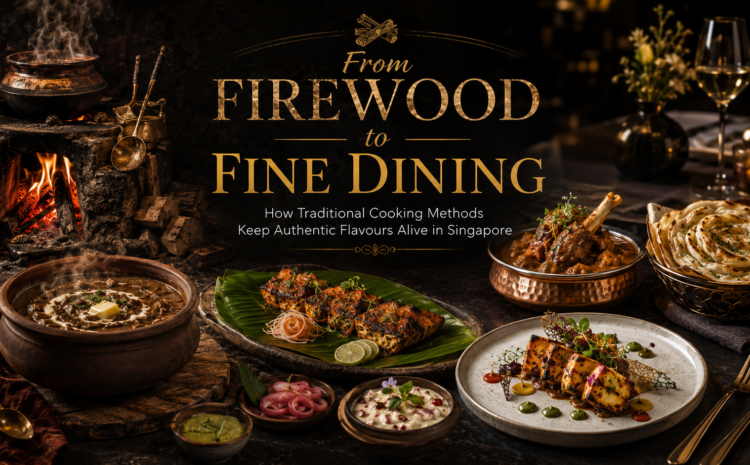
Today, many restaurants are modern in design, plating and service, but the heart of the food still depends on old cooking techniques. Firewood-style cooking, dum preparation, tandoor grilling, slow simmering and hand-ground spices continue to keep authentic Indian flavours alive. This is where tradition meets fine dining.
Why Traditional Cooking Still Matters
Modern kitchens are faster and more efficient, but some flavours cannot be rushed. Traditional Indian cooking methods are designed to build taste slowly. They allow spices to release their oils, meat to become tender, rice to absorb aroma and gravies to become deep and balanced.
For example, when cumin, cloves, cardamom and cinnamon are heated in ghee, they create a strong base for many Indian dishes. When onions are slowly browned, they add natural sweetness to curries. When meat is marinated for hours, the spices go deeper into the dish. These steps may look simple, but they make a big difference.
Traditional cooking also gives food a sense of identity. It connects each dish to its origin, region and culture. Whether it is chicken dum biryani, mutton korma, butter chicken, dal tadka or chapli kebab, the method of cooking shapes the final taste.
Firewood-Style Cooking: The Flavour of Smoke and Heat
Before modern gas stoves and electric ovens, many Indian dishes were cooked over firewood or charcoal. This style of cooking created a natural smoky flavour that became part of the food’s character. Even today, chefs try to recreate that depth using charcoal grills, tandoors and controlled flame cooking.
Firewood-style cooking is not only about smoke. It is also about uneven, natural heat. The food cooks slowly, absorbs the aroma of the flame and develops a rustic flavour. This is why dishes cooked over fire often taste more earthy and intense.
In Indian cuisine, smoky flavours are especially important in kebabs and grilled dishes. Chicken tikka, seekh kebab, tandoori chicken, chapli kebab and lamb chops all benefit from high heat and slight charring. The outside becomes smoky and crisp, while the inside stays juicy.
In Singapore’s dining scene, this traditional flavour is now presented in more polished ways. Fine dining restaurants may serve kebabs with elegant plating, chutney drops, fresh herbs and modern sides. But the soul of the dish still comes from the fire.
Dum Cooking: The Secret Behind Authentic Biryani
Dum cooking is one of the most famous traditional methods in Indian food. The word “dum” refers to slow-cooking food in a sealed pot over low heat. This technique is especially important for dum biryani.
In a good dum biryani, rice and meat are layered with spices, fried onions, herbs and sometimes saffron. The pot is sealed so that the steam stays inside. As the dish cooks slowly, the rice absorbs the flavor of the meat, spices, and aromatics.
This is why dum biryani has such a special aroma. It is not just rice mixed with curry. It is a carefully layered dish where every grain carries flavour. Chicken dum biryani, mutton dum biryani, vegetable dum biryani and paneer biryani all depend on this method to create depth.
For food lovers in Singapore, dum biryani remains one of the best examples of how traditional cooking can survive in a modern setting. Whether served in a food court, takeaway box or fine dining plate, the dum method keeps the dish authentic.
Tandoor Cooking: Where Heat Creates Magic
The tandoor is one of the most iconic cooking tools in Indian cuisine. It is a clay oven that uses very high heat to cook food quickly while locking in flavour. Tandoor cooking is used for dishes like naan, tandoori chicken, chicken tikka, seekh kebab and tandoori prawns.
What makes the tandoor special is the combination of heat and smoke. Meat becomes slightly charred on the outside and tender inside. Bread like naan and roti becomes soft, chewy and lightly crisp in spots. This texture is difficult to copy with normal cooking methods.
Tandoori cooking also depends heavily on marination. Yogurt, chilli, turmeric, garam masala, ginger, garlic and lemon are often used to prepare the meat before it enters the tandoor. The result is bold, smoky and full of flavour.
In fine dining restaurants, tandoori dishes are often presented with stylish sides, pickled onions, mint chutney or delicate sauces. But even with modern plating, the traditional oven remains the heart of the experience.
Slow-Cooked Curries: Patience in Every Spoonful
Indian curries are known for their rich gravies and layered spices. But the best curries are not made by simply mixing ingredients together. They are built step by step.
A good curry often begins with oil or ghee, whole spices, onions, ginger, garlic and tomatoes. Each ingredient is cooked carefully before the next one is added. This allows the flavour to grow naturally.
Dishes like butter chicken, chicken tikka masala, mutton korma, lamb curry, palak paneer, paneer butter masala and chana masala all need time to develop. In mutton korma, slow cooking helps the meat become soft and allows the spices to deepen. In dal tadka, lentils become comforting when simmered properly and finished with a hot tempering of spices.
Slow cooking is where traditional Indian food shows its patience. The process cannot be replaced by shortcuts without losing flavour. This is why both casual eateries and fine dining chefs continue to respect this method.
Hand-Ground Spices and Fresh Masalas
Spices are the backbone of Indian food, but how they are prepared matters. Freshly ground spices can make a dish taste brighter and more aromatic than ready-made powders. Traditional kitchens often roast and grind spices to bring out their natural oils.
Cumin, coriander, black pepper, cardamom, cloves, cinnamon, fennel, mustard seeds and dried chillies all behave differently when roasted or ground fresh. A freshly made masala can completely change the flavour of a dish.
In Singapore, many Indian restaurants use a mix of tradition and convenience. Some masalas may be prepared in advance, while signature dishes often use special spice blends. Fine dining kitchens may even create their own house masalas to give each dish a unique identity.
This balance helps restaurants maintain consistency while still offering authentic flavour.
From Street-Style Comfort to Fine Dining Elegance
One of the most exciting things about Indian food in Singapore is how flexible it has become. The same dish can feel homely in a casual setting and luxurious in a fine dining restaurant.
Take kebabs, for example. In a casual meal, they may be served with onions, lemon and chutney. In a fine dining restaurant, they may arrive with microgreens, flavored yogurt, or artistic plating. The presentation changes, but the traditional cooking remains important.
The same applies to biryani. A food court biryani may focus on portion, aroma and comfort. A fine dining biryani may focus on premium rice, elegant plating, tender meat and refined sides. Both versions can be delicious if the cooking method is respected.
This is the beauty of Indian cuisine. It can move from firewood to fine dining without losing its soul.
Why Singapore Food Lovers Appreciate Authentic Indian Flavours
Singapore is a city that understands food. People here enjoy variety, quality and bold flavours. Indian food fits naturally into this culture because it offers depth, spice and comfort.
Food lovers in Singapore often look for dishes that feel real and satisfying. They appreciate the smoky taste of tandoori chicken, the rich layers of dum biryani, the warmth of dal tadka and the creamy comfort of butter chicken. These dishes are not only filling; they offer a complete sensory experience.
Traditional cooking methods also make Indian food stand out in a competitive food scene. When a dish has real aroma, balanced spice and proper texture, diners can taste the difference.
Keeping Tradition Alive in Modern Restaurants
Modern Indian restaurants have an important role to play. They must serve food that looks appealing to today’s diners while protecting the methods that make the cuisine special.
This means respecting slow cooking, proper marination, fresh spices and traditional heat methods. It also means teaching diners that authentic Indian food is not only about being spicy. It is about balance, patience and craft.
Fine dining can help Indian food reach new audiences. It can present familiar dishes in creative ways while still honouring their roots. At the same time, casual restaurants and food courts keep these flavours accessible to everyday diners.
Together, they help traditional Indian cooking stay alive in Singapore.
Conclusion
From firewood-style cooking to fine dining kitchens, traditional Indian cooking methods continue to shape the way food tastes. Techniques like dum cooking, tandoor grilling, slow simmering and hand-ground masalas are not old-fashioned. They are the reason Indian food remains rich, aromatic and memorable.
In Singapore, where food culture is vibrant and diverse, these methods help Indian cuisine stand out. Whether it is chicken dum biryani, mutton korma, butter chicken, chapli kebab, palak paneer, naan or haleem, every dish carries a piece of tradition.
Fine dining may change the presentation, but the flavour still begins with the basics: fire, spice, time and skill. That is how authentic Indian flavours stay alive, one dish at a time.