

Introduction
To understand Singapore, you do not always need to begin with museums, landmarks, or city tours. Sometimes, the best place to start is a hawker center.
A hawker center may look simple at first. Rows of food stalls, plastic trays, busy tables, aunties and uncles calling out orders, office workers eating lunch, families sharing dinner, tourists comparing dishes, and the smell of fried noodles, curry, grilled satay, and fresh kopi in the air. But behind this everyday scene is one of the strongest symbols of Singapore’s identity.
Singapore’s hawker centers are not just places to eat. They are social spaces, cultural meeting points and living examples of how people from different backgrounds share one city. For tourists, they offer a delicious introduction to local life. For Singaporeans, they are part of daily routine, childhood memories, and community culture.
Hawker Centres Are Singapore’s Everyday Dining Rooms
In many countries, eating out can feel like a luxury. In Singapore, hawker centres make eating out part of everyday life. They are where people go before work, during lunch breaks, after school, on weekends and late at night when cravings hit.
What makes hawker centres special is how open and practical they are. You do not need to dress up, book a table or spend a lot to enjoy a good meal. You can sit beside strangers, share a table during peak hours, and still feel like you belong.
This tells us something important about Singaporeans: food is not only about taste, but also about access, convenience and community. Hawker centres make good food available to people from different walks of life. Students, families, taxi drivers, office workers, retirees and tourists can all enjoy the same space.
That shared dining culture is one reason hawker centres feel so deeply connected to Singapore’s way of life.
A Reflection of Singapore’s Multicultural Identity
Singapore is home to many cultures, and hawker centres show this beautifully. In one place, you can find Chinese, Malay, Indian, Peranakan and other local food traditions side by side.
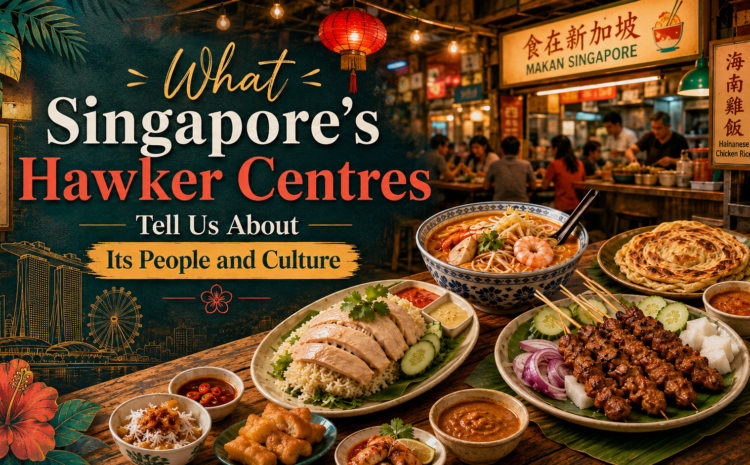
A tourist may begin with Hainanese chicken rice, then try laksa, satay, nasi lemak, roti prata, char kway teow, mee goreng, fishball noodles, biryani or kaya toast. Each dish carries a story of migration, adaptation and cultural exchange.
Indian food also has a strong place in hawker culture. Dishes like roti prata, thosai, mee goreng, nasi biryani, chicken curry and teh tarik show how Indian and Indian-Muslim food traditions became part of Singapore’s shared food scene. These dishes are enjoyed not only by Indian communities, but by people of many backgrounds.
This is what makes Singapore’s food culture so interesting. Hawker centres do not separate cultures; they place them next to each other. A person can order prata from one stall, laksa from another, and kopi from a third. That casual mixing says a lot about Singapore’s multicultural spirit.
Food That Carries Memory and Heritage
Many hawker dishes are simple on the surface, but they carry years of practice. A plate of chicken rice depends on tender chicken, fragrant rice and balanced chilli sauce. A bowl of laksa needs rich coconut gravy, noodles, herbs and seafood flavour. Roti prata depends on dough skill, heat and timing. Satay needs proper marination, grilling and peanut sauce.
These dishes are not created by accident. They are passed down through families, apprenticeships and years of stall experience. Some hawkers spend decades perfecting one dish. That dedication is part of what makes hawker food so meaningful.
For locals, hawker food is often tied to memory. Someone may remember eating nasi lemak before school, sharing rojak with grandparents, ordering prata after a late night out, or buying biryani for a weekend family lunch. These dishes become part of personal stories.
For tourists, tasting hawker food is a way of experiencing heritage directly. Instead of only reading about Singapore’s culture, they can taste it through rice, noodles, spices, sauces and freshly cooked meals.
What the Queue Tells You About Singaporeans
At hawker centres, queues are part of the experience. A long line outside a stall usually means something good is happening. Singaporeans are known for being willing to queue for food they trust.
This says a lot about local food culture. People care about quality. They remember which stall has the better sambal, which uncle makes the crispier prata, which auntie serves the richer curry, and which stall gives the most satisfying portion.
The hawker queue also shows patience and loyalty. Some diners return to the same stalls for years. They know the taste, the seller and sometimes even the best time to visit before the crowd arrives.
For tourists, following a queue can be a fun way to discover local favourites. But it is also helpful to explore beyond famous stalls. Sometimes, the quieter stall with a hardworking hawker can surprise you with a wonderful meal.
A Place Where Generations Meet
Hawker centres are one of the few places where different generations naturally gather. Older Singaporeans may visit for familiar flavours and morning kopi. Working adults come for affordable lunches. Young people meet friends for casual meals. Families bring children to introduce them to local food.
This creates a rare kind of public space. It is not formal, but it is meaningful. Conversations happen over bowls of noodles, plates of rice and cups of tea. People may not know each other, but they share the same tables, sounds and smells.
The presence of older hawkers also reminds us that food heritage depends on people. Many traditional dishes survive because someone wakes up early, prepares ingredients, cooks with care and serves hundreds of customers a day.
At the same time, younger hawkers are bringing new energy into the scene. Some experiment with modern presentation, new flavours or digital ordering, while still respecting traditional recipes. This balance between old and new keeps hawker culture alive.
Hawker Food Shows Singapore’s Love for Practical Comfort
Singapore is fast-paced, but hawker centres offer practical comfort. The food is quick, filling and full of flavour. Whether someone wants a light breakfast or a hearty dinner, there is usually something suitable.
For breakfast, kaya toast with soft-boiled eggs and kopi is a local classic. Roti prata with curry is another favourite. For lunch, chicken rice, nasi lemak, mee siam, biryani, fish soup or economy rice are common choices. For dinner, people may enjoy satay, char kway teow, hokkien mee, curry rice or zi char dishes.
This variety reflects the way Singaporeans eat: efficiently, but with strong opinions about taste. A meal can be affordable and quick, but it still has to be satisfying.
Hawker centres prove that comfort food does not need to be fancy. Sometimes, the best meal is a hot plate of noodles, a bowl of curry or a fragrant serving of rice eaten at a busy table.
Why Tourists Should Visit Hawker Centres
For tourists, hawker centres are one of the best ways to experience Singapore like a local. They offer variety, value and authenticity in one place.
Instead of choosing only one cuisine, visitors can try many dishes in one meal. A group can share chicken rice, laksa, satay, roti prata, biryani, carrot cake, sugarcane juice and local desserts like ice kachang or chendol. This makes hawker centres perfect for curious food lovers.
Tourists should also notice the small details: how people reserve seats, how drinks are ordered, how trays are returned, how stall owners move quickly during peak hours, and how different languages can be heard across the centre. These details show real Singapore life.
A hawker centre visit is not only about eating. It is about observing how a city connects through food.
Keeping Hawker Culture Alive
Even though hawker centres are loved, keeping hawker culture alive takes effort. Hawkers work long hours, food costs change, and younger generations may not always want to enter the trade. At the same time, customers expect affordable prices and consistent taste.
Supporting hawker culture means more than posting food photos. It means appreciating the people behind the food, returning trays, being patient during busy hours, trying different stalls and understanding the skill that goes into each dish.
For local diners, it means continuing to value everyday food heritage. For tourists, it means treating hawker centres with respect, curiosity and openness.
Conclusion
Singapore’s hawker centres tell us a lot about its people and culture. They show a country that values food, diversity, efficiency, community and shared spaces. They remind us that culture is not only found in grand buildings or formal traditions. It can also be found in a bowl of laksa, a plate of chicken rice, a piece of roti prata or a serving of biryani eaten at a crowded table.
For locals, hawker centres are part of everyday life. For tourists, they are a gateway into Singapore’s heart. They bring people together through flavour, habit and memory.
In the end, hawker centres are more than places to eat. They are where Singapore’s story is cooked, served and shared every day.