

Introduction
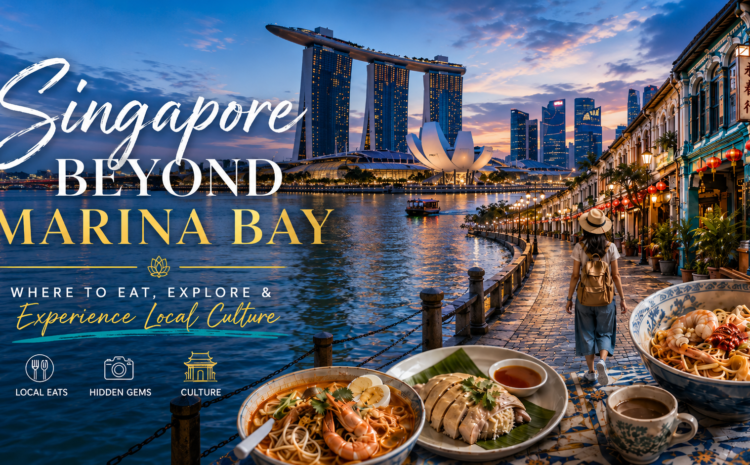
Marina Bay is beautiful. The skyline, waterfront views, luxury hotels and famous attractions make it one of Singapore’s most photographed places. But if you want to understand the real flavour of the city, you need to go beyond Marina Bay.
Singapore’s heart is found in its neighbourhoods, hawker centres, heritage streets, old shophouses, food courts, temples, markets and everyday dining spots. This is where locals eat, tourists discover hidden gems, and culture comes alive through food.
From the colourful lanes of Little India to the heritage charm of Chinatown, from the Malay-Arab influence of Kampong Gelam to the Peranakan beauty of Katong-Joo Chiat, Singapore offers much more than postcard views. Each area has its own food story, culture and personality.
This guide takes you beyond Marina Bay to explore where to eat, what to try and how to experience Singapore like someone who truly loves food and culture.
Why Go Beyond Marina Bay?
Marina Bay shows Singapore’s modern side, but the neighbourhoods show its soul. Once you step away from the central skyline, you begin to see how diverse the city really is.
Singapore is shaped by Chinese, Malay, Indian, Peranakan and many other communities. This mix is reflected in the food, architecture, languages, festivals and daily life. You can walk through one street and smell curry, grilled satay, fresh kopi, roasted meats and spices within minutes.
For tourists, exploring beyond Marina Bay creates a richer trip. For locals, it is a reminder that Singapore’s best experiences are often found in familiar places. A simple meal at a hawker centre or a walk through a historic neighbourhood can tell you more about the country than a luxury attraction alone.
Little India: Colour, Spice and Indian Food Culture
Little India is one of Singapore’s most vibrant neighbourhoods. It is full of colour, energy, murals, flower garlands, spice shops, jewellery stores, temples and busy food spots. The area feels alive at almost every hour.
Food is one of the biggest reasons to visit Little India. This is where you can enjoy Indian dishes that are rich, comforting and full of character. Popular choices include biryani, roti prata, thosai, chapati, butter chicken, mutton curry, fish curry, paneer butter masala, dal tadka and masala tea.
For tourists new to Indian food, Little India is a great place to start. A plate of chicken biryani gives you fragrant rice, spices and tender meat. Roti prata with curry is crisp, soft and satisfying. Thosai is lighter but still flavourful, especially with chutneys and sambar.
Beyond food, take time to explore the streets. Visit traditional stores, admire the colourful buildings and enjoy the atmosphere. Little India is not just a dining stop. It is a cultural experience.
Chinatown: Heritage, Hawker Food and Old-School Flavours
Chinatown is another must-visit area beyond Marina Bay. It blends temples, heritage streets, souvenir shops, traditional medicine halls, tea houses and one of Singapore’s strongest food cultures.
For food lovers, Chinatown is a great place to try classic local dishes. You may find Hainanese chicken rice, char kway teow, wanton noodles, roasted duck rice, satay, popiah, carrot cake, laksa and local desserts like chendol or ice kachang.
Chinatown Complex is especially well known for hawker food. It gives visitors a chance to experience Singapore’s everyday dining culture in a very local setting. The beauty of eating here is the variety. One person can order noodles, another can try rice dishes, and someone else can go for snacks or desserts.
Chinatown also shows how food and heritage connect. The temples, old shophouses and food stalls together create a strong sense of history. It is a place where the past and present sit side by side.
Kampong Gelam: Malay Heritage, Cafes and Street Culture
Kampong Gelam is one of Singapore’s most interesting cultural areas. It is known for its Malay heritage, Sultan Mosque, colourful streets, textile shops, murals, boutiques and cafes. It has a creative energy that appeals to both tourists and locals.
Food in Kampong Gelam is just as exciting. You can find nasi padang, nasi lemak, beef rendang, mee rebus, mee siam, satay, grilled meats, Middle Eastern dishes and modern cafe food. The area is also a good place to enjoy dishes influenced by Malay, Arab and Indian-Muslim cooking.
Nasi padang is a great dish to try if you enjoy variety. You can choose rice with different sides like rendang, vegetables, sambal, curry and fried items. Satay is perfect for sharing, especially when served with peanut sauce, cucumber and onions.
Kampong Gelam is best explored slowly. Walk around Haji Lane, admire the street art, visit small shops and stop for a meal or drink. It is stylish, historic and full of flavour.
Katong-Joo Chiat: Peranakan Charm and Comfort Food
Katong-Joo Chiat offers a different side of Singapore. It is known for colourful Peranakan shophouses, heritage architecture, relaxed streets and food that feels deeply local.
This neighbourhood is strongly connected with Peranakan culture, which blends Chinese, Malay and regional influences. Food here is rich, aromatic and full of personality. Must-try dishes include laksa, ayam buah keluak, kueh pie tee, nyonya chap chye and colourful Peranakan kueh.
Katong laksa is one of the area’s most famous dishes. It is creamy, spicy and comforting, made with rice noodles in coconut-based gravy. It is the kind of dish that tells you how layered Singapore food can be.
The area is also perfect for walking. The shophouses are beautiful, and the streets feel more relaxed than central tourist zones. It is a great choice for travellers who want food, culture and photography in one neighbourhood.
Tiong Bahru: Old Neighbourhood, Modern Taste
Tiong Bahru is one of Singapore’s most charming neighborhoods. It mixes old apartments, traditional markets, bakeries, cafes, bookstores, and hawker food. It has a slower, more local rhythm compared to the busy city center.
Food here ranges from old-school local favorites to modern cafe meals. At the market and hawker centre, visitors can try chwee kueh, lor mee, fried noodles, roast meats, rice dishes and local breakfast items. Around the neighbourhood, there are bakeries and coffee spots that attract younger crowds.
Tiong Bahru shows how Singapore balances old and new. You can eat a traditional hawker breakfast in the morning and enjoy a modern cafe dessert later. It is simple, stylish and very Singaporean.
Hawker Centres: The Real Taste of Singapore
No guide to local culture in Singapore is complete without hawker centres. These are community dining spaces where many different food traditions come together under one roof.
Hawker centres are important because they make good food accessible. Locals eat there regularly, and tourists visit them to taste Singapore’s food culture in a casual setting. Hawker culture is officially recognised as part of Singapore’s intangible cultural heritage, which shows how important it is to the country’s identity.
Some famous hawker dishes include chicken rice, laksa, nasi lemak, satay, roti prata, mee goreng, char kway teow, hokkien mee, fish soup, biryani and sugarcane juice.
For tourists, hawker centres are the best way to try many dishes at once. For locals, they are part of daily life. The sound of orders, the smell of food, the shared tables and the mix of people all show Singapore’s culture in action.
What to Eat If You Want a Full Local Food Experience
If you are planning a food-focused day beyond Marina Bay, try mixing dishes from different cultures.
Start with kaya toast, soft-boiled eggs and kopi for breakfast. For lunch, go for chicken rice, laksa or biryani. In the afternoon, try local snacks such as curry puff, popiah or kueh. For dinner, choose satay, roti prata, nasi padang, butter chicken, mutton curry or grilled seafood.
If you enjoy Indian food, include dishes like dum biryani, kebabs, paneer curry, dal tadka, naan and chutney. These dishes fit well into Singapore’s multicultural dining scene and are perfect for people who enjoy hearty, spiced meals.
The best way to eat in Singapore is to share. Order a few dishes, taste different flavours and let the meal become part of the exploration.
Tips for Tourists and Locals Exploring Beyond Marina Bay
Wear comfortable shoes because many neighbourhoods are best explored on foot. Visit hawker centres during off-peak hours if you want a more relaxed experience. Bring an appetite, but do not try to eat everything at once.
For tourists, be open to new flavours. Some dishes may be spicy, creamy, smoky or unfamiliar, but that is part of the fun. For locals, revisit areas you may have taken for granted. Sometimes, the best discoveries are in neighbourhoods you already know.
Take your time. Singapore is small, but its food culture is deep.
Conclusion
Singapore beyond Marina Bay is colourful, flavourful and full of stories. Little India brings spice and energy. Chinatown offers heritage and hawker classics. Kampong Gelam mixes tradition with creativity. Katong-Joo Chiat shares Peranakan beauty and comfort food. Tiong Bahru blends old charm with modern taste.
Together, these neighbourhoods show the real Singapore: diverse, food-loving, practical, creative and deeply connected to culture.
If Marina Bay shows you the city’s skyline, these places show you its heart. And often, the best way to experience that heart is through a plate of food shared with good company.