

Biryani is not just meat, spices and rice. It’s a dish with a story. Each spoonful is filled with the scent of royal kitchens, of long trade routes, of families coming together, of feasts for festivals, and of busy food courts where people line up for a warm plate of comfort.
If someone in Singapore is searching for biryani today, they might just be looking for a good lunch, a filling dinner, or a biryani restaurant nearby. But there is a long journey behind that plate. Biryani has traveled across regions, cultures and generations to become one of the most loved rice dishes in Singapore and around the world.
In this blog, we explore the interesting history of biryani, how it evolved, why dum biryani is so popular and how this royal dish found home in Singapore’s vibrant food culture.
The Royal Beginning of Biryani
Biryani is often associated with royal kitchens and was once a grand, luxurious dish. In earlier times, rice, meat, spices, and ghee were valuable ingredients. Combining them into one rich dish made biryani suitable for kings, nobles, soldiers, and large gatherings.
Rice and meat dishes were introduced during the Mughal period in the Indian sub-continent and became popular with the rich. Mughal cuisine is known for the use of aromatic spices, dried fruits, nuts, slow cooked meats and elaborate meals. Gradually, Biryani became associated with royal dining, celebration and hospitality.
But palaces did not always serve up biryani. Like many great dishes, it made a slow journey from the royal kitchens to public kitchens, family homes, markets and finally to restaurants and food courts.
That is one of the reasons why biryani remains so popular to this day. It’s both familiar and new. It can be eaten as a daily meal with filling or served at festivals and wedding
How Biryani Changed Across Regions
Perhaps one of the most interesting things about biryani is the fact that there is no one version. As biryani spread, each region started to stamp its own flavor, style of cooking and personality on the dish.
Some are spicy and strong while some are fragrant and mild. Some focus on meat or seafood or vegetables, some on potatoes or eggs.
Popular regional styles include:
- Hyderabadi biryani is renowned for its robust aroma, dum cooking, and potent spices.
- Awadhi or Lucknowi biryani is renowned for its more delicate, fragrant style.
- Kolkata biryani is well-known for using potatoes and eggs.
- Malabar biryani: shorter-grain rice and coastal flavors
- Dindigul biryani is renowned for its tangy flavor and strong spices.
- Vegetable biryani is a well-liked vegetarian dining option.
This adaptability helped biryani become a worldwide favourite. The basic idea was the same though. Rice, spices, slow cooked flavor. But the details varied according to local taste.
That’s why biryani is simultaneously traditional and modern.
Biryani Becomes a Dish for Everyone
Although biryani has royal roots, its biggest success came from becoming a dish for everyone.
It works well for a lot of occasions.
- Family mealtimes
- Lunches in the Office
- Weekend dinners
- Carnival’s
- marriage
- Catering orders
- Food court meals
- Takeaway and delivery
Biryani is hearty, flavorful and easy to share. One tray will feed a group. One hungry person can be satisfied by a single plate. This makes it ideal for both personal meals and bulk orders.
It also rides good. Biryani, unlike some dishes that lose taste quickly after being cooked, often retains its flavour even after being taken away or delivered. This is one of the reasons biryani delivery in Singapore has a high search intent today.
Biryani in Singapore’s Food Culture
Singapore is also well known for its multicultural cuisine. There is a co-existence of Chinese, Malay, Indian, Peranakan and many other food traditions. Food courts and hawker centers are a huge part of daily life, where people from all walks of life come together to eat, bond and eat well at cheap prices.
Biryani is also popular in Singapore, where it is consumed as part of Indian Muslim, Indian, and South Asian cuisine culture. Biryani isn’t just festive food for many Singapore diners. It is a common choice for lunch or dinner. You will see it on the menus of restaurants, food courts, take-away counters and caterers.
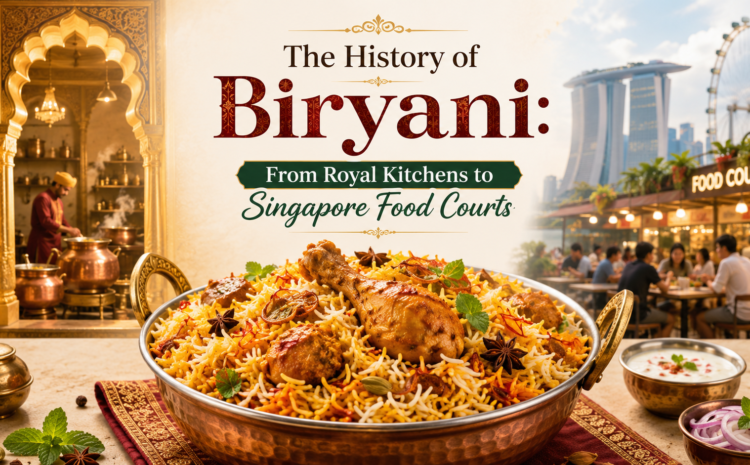
From Royal Kitchens to Food Courts
What gives the dish its potency is the biryani’s journey from royal kitchens to Singapore food courts.
It began as something great and elaborate. Eventually it was ready, it was usable, it was loved by ordinary diners.
Biryani had a new stage in Singapore’s food courts. Biryani was no longer an occasional treat, but everyday food. Whether you’re a shopper at Parkway Parade, a family in Marine Parade, an office worker on lunch break or someone searching online for biryani near me, there’s a dish that has once been a royal dining tradition.
Such is the beauty of biryani. It has history but doesn’t feel old. It has history but is part of modern life.”
Why Singapore Loves Biryani
Biryani works especially well in Singapore because the country appreciates bold flavours, multicultural food, and convenient dining.
Here are a few reasons people love biryani:
- It is satisfying: rice, protein, and spices make it a complete meal
- It is aromatic: the smell of biryani is instantly inviting
- It has variety: chicken, mutton, lamb, fish, prawn, egg, paneer, and vegetable options
- It suits groups: perfect for sharing, catering, and family meals
- It feels special: even a simple plate of biryani can feel like a treat
- It connects cultures: biryani reflects South Asian, Indian Muslim, and regional food traditions
This takes biryani beyond a menu item. It’s comfort food, celebration food, everyday food all at once.
Biryani Today: Traditional Taste, Modern Convenience
People want authenticity but they also want convenience.” They want rich flavour, but they also want easy ordering, fast pickup and reliable delivery.
That’s why the biryani restaurants in Singapore now serve different customer needs:
- Dine-in meals
- Takeaway orders
- Online ordering
- Biryani delivery
- Catering for events
- Bulk orders for offices and families
- Combo meals with kebabs, haleem, curry, and drinks
The plate has changed, but the soul is still there. Whether enjoyed at a royal feast or in a Singapore food court, the essence of biryani is the same: fragrant rice, complex flavour, and comfort.
Final Thoughts
Biryani’s history is a tale of migration. It traveled from royal kitchens to regional homes. It passed through cities, communities and cultures. Eventually it made its way to places like Singapore, where it became part of a rich and varied food scene.
When people are searching for best biryani in Singapore today, they are not just searching for food. They want flavor, tradition, comfort, and a meal to remember.
Biryani keeps bringing people together, from dum biryani to haleem and kebabs. It is a dish that has journeyed through history, but it still tastes fresh on every plate.
So next time you’re tucking into a warm plate of biryani in Singapore, remember this: you’re not just eating rice and spices. You are tasting a story that started long ago and continues today in every food court, restaurant and family gathering.