


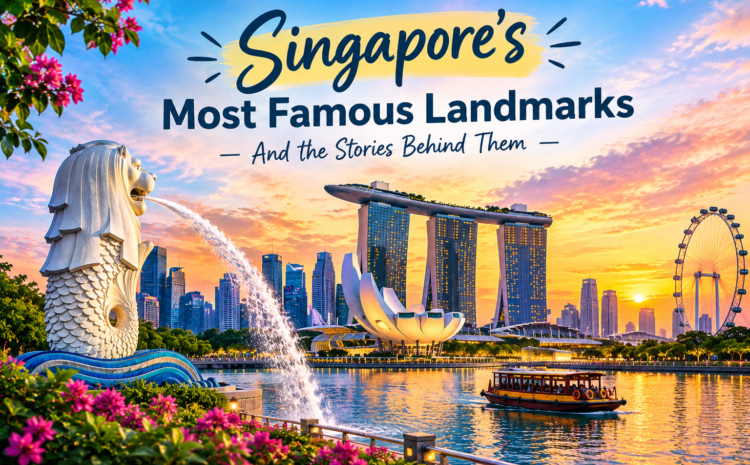
Singapore may be known today for its modern skyline, efficient transport and impressive attractions, but the city’s identity goes far beyond its glass towers. Behind many of Singapore’s most recognisable landmarks are stories of trade, migration, heritage, innovation and transformation.
For travellers, visiting these places is more meaningful when you understand what they represent. From historic buildings to futuristic gardens, Singapore’s landmarks offer a glimpse into how a small island developed into one of Asia’s most dynamic cities.
How Singapore Became a Global City
Singapore’s transformation did not happen overnight.Its strategic location on important maritime trade routes made it a thriving trading port, attracting merchants and communities from across Asia and beyond.
Chinese, Indian, Malay, Arab and European influences were woven into the city’s cultural fabric over time. Such diversity is still evident in Singapore’s architecture, languages, festivals, neighborhoods and traditions.
After gaining independence in 1965, Singapore went through rapid economic and urban development. New infrastructure, businesses, public spaces and residential areas changed the shape of the city.
Yet, Singapore did not completely leave its past behind. Historic districts and preserved buildings continue to sit alongside modern landmarks. This combination of old and new is one of the most fascinating parts of experiencing Singapore today.
10 Famous Landmarks & Their Stories
1. Marina Bay Sands
Few places represent modern Singapore as strongly as Marina Bay Sands. Its three towers and distinctive rooftop SkyPark have become part of the city’s visual identity.
More than an architectural attraction, the development reflects Singapore’s ambition to establish itself as a major destination for tourism, business, and entertainment. Its location beside Marina Bay also offers visitors views of the changing city skyline.
2. The Merlion
The Merlion is one of Singapore’s most recognisable symbols. With the head of a lion and the body of a fish, the statue represents two important ideas connected to Singapore.
The fish refers to the island’s origians as a fishing village, while the lion connects to the traditional story behind the name Singapore. Today, it’s almost a rite of passage for first-time visitors to see the Merlion looking out over Marina Bay.
3. Gardens by the Bay
Gardens by the Bay is a different aspect of Singapore’s development, the idea of developing a city where nature and urban life can co-exist.
Its famous Supertrees, conservatories and landscaped gardens have made it one of the city’s most photographed attractions. The landmark is also part of Singapore’s wider effort to bring more greenery into its urban environment.
4. Hotel Raffles
Raffles Hotel is a different chapter of Singapore’s history. The hotel was founded in the colonial era and was associated with the city’s early development as an international trading center.
Its architecture and atmosphere provide a glimpse into Singapore’s colonial past. The surrounding area is also a reminder that some of the city’s oldest stories remain close to its modern commercial districts.
5. Singapore Flier
In addition to the Marina Bay, the Singapore Flier offers another way for visitors to understand the city. Looking down from above it is easier to see the contrast between historic districts, modern skyscrapers, waterfront developments and green zones.
The attraction has become a landmark on the skyline of Singapore and a popular sightseeing spot, particularly for tourists who want to enjoy panoramic views of the city.
6. Bay Theatres – Esplanade
The Esplanade is instantly recognisable for its unusual architecture and unique dome structures. It is frequently associated with the performing arts and has emerged as an important cultural space in Singapore.
Located close to Marina Bay, it is near many of the city’s most famous landmarks and the area around is ideal for exploring Singapore’s modern cultural identity.
7. Jewel Changi Airport
Jewel Changi Airport proves that even a transport hub can be a destination in its own right.
Its enormous indoor waterfall, lush surroundings, and contemporary design have drawn visitors who might have come to Singapore for just a quick stop. Jewel is a testament to Singapore’s reputation for blending technology, architecture, and nature in surprising ways.
8. Sri Mariamman Temple
Sri Mariamman Temple, Singapore’s oldest Hindu temple, is located in Chinatown. The colorful architecture and detailed entrance tower immediately made it stand out from the surrounding buildings.
The temple also stands for the contribution of Singapore’s Indian community to the city’s development. For visitors, it is a chance to witness the multiculturalism that has shaped Singapore for generations.
9. Sultan Mosque (Masjid Sultan)
The Sultan Mosque’s golden domes are one of Kampong Glam’s defining sights. The mosque continues to be a significant place of worship with strong links to Singapore’s Malay and Muslim heritage.
The surrounding streets add another dimension to the experience, with traditional architecture, independent businesses, and cultural attractions making for a neighborhood that feels decidedly different to the Marina Bay area.
10. Chinatown Heritage Area
Chinatown is more than a popular tourist stop. Its streets, shophouses, temples and cultural institutions tell the story of Chinese migration and community life in Singapore.
Walking through the area allows visitors to see how historic architecture has been preserved while the neighbourhood has adapted to modern city life.
The Historic Neighbourhoods Behind Modern Singapore
Singapore’s landmarks make more sense when viewed alongside its neighborhoods.
Little India reveals the influence of Singapore’s Indian community through colorful streets, historic places of worship, and traditional architecture.
Kampong Glam reflects Malay, Muslim, and Arab influences and is known for its heritage buildings and distinctive streetscape.
Chinatown offers another perspective through Chinese heritage, traditional shophouses and historic temples.
Meanwhile, neighborhoods such as Joo Chiat and Tiong Bahru show how Singapore continues to combine heritage with contemporary lifestyles.
Together, these areas tell a broader story: Singapore did not become a global city by replacing its past. Instead, many parts of its past continue to exist within the modern city.
What Tourists See vs. What Locals Experience
For a first-time visitor, Singapore can appear to be a city of famous attractions. Marina Bay, Gardens by the Bay, Sentosa and the Merlion naturally become highlights of a short trip.
Locals, however, may experience the city differently.
Instead of moving from one major attraction to another, everyday Singapore can involve quiet neighbourhood walks, community spaces, parks, shopping streets and heritage areas. The contrast is important because it shows that Singapore is not simply a collection of tourist attractions.
Even its dining culture reflects this mix. Visitors exploring the city can discover everything from chicken biryani and mutton biryani to chicken tikka, seekh kebab and traditional curries, alongside the many other cuisines that form part of Singapore’s multicultural identity.
Hidden Places Worth Exploring
Once the famous landmarks have been covered, Singapore has plenty more to offer.
Explore its lesser-known heritage streets, discover quieter green spaces or take a walk through neighbourhoods away from the main tourist routes. These experiences can reveal details that are easy to miss when following a traditional sightseeing itinerary.
Look beyond the major skyline attractions and pay attention to old shophouses, murals, local markets, community buildings and small architectural details. Often, these ordinary-looking places provide some of the most memorable glimpses into Singapore’s past.
How to Experience Singapore Beyond the Famous Attractions
The best way to understand Singapore is to combine its famous landmarks with its everyday character.
Start with the major sights, but leave time to explore a heritage neighbourhood. Visit a modern attraction, then walk through an older street nearby. Spend time in a park, explore local architecture, and speak with people who know the area.
And when it’s time to take a break from exploring, Singapore’s multicultural dining scene can be part of the journey. Enjoying dishes such as dum biryani, tandoori chicken, or a flavourful kebab, followed by a refreshing mango lassi, can offer another small connection to the cultures that have helped shape the city.
When you stop seeing Singapore as just a photo destination and start seeing it as a city with layers of history, culture and everyday life, it becomes even more interesting.
Conclusion
The most famous sights in Singapore are impressive, but the real value is in the stories behind them. From Merlion and Marina Bay Sands to Sri Mariamman Temple and Kampong Glam, each place represents a different part of the city’s journey.
The best Singapore experience comes from looking past the postcard views. Discover the landmarks, wander the historic neighborhoods, visit the lesser-known places and experience the cultures that still shape the city.